In the Marvel cinematic universe, there exists a substance known as Terrigen Mist. When ordinary people are exposed to it, something hidden within them awakens. It does not introduce anything foreign; rather, it reveals what was already there, dormant and unseen. The transformation appears miraculous, yet it rests on a deeper archetypal truth: that human potential has always exceeded its visible expression.
Here is a good analogy for the future of work: there was a time when a hundred men with shovels would dig a trench or pit, slowly, methodically, their labor measured in sweat and hours. Then came the bulldozer. Inevitably, a group of ditch diggers must have sat together, shaking their heads, lamenting that this infernal machine would take all their jobs. And in a narrow sense, they were right. The bulldozer did replace them. But that framing, while emotionally poignant, was economically incomplete. What the bulldozer actually did was redefine the unit of labor itself: a single operator could now do the work of a hundred.
Autoresponders were supposed to liberate us. Instead, they gave us out-of-office loops, canned apologies, and the quiet erosion of trust.
AI risks repeating the same mistake.
Today, many organizations believe they’ve crossed some meaningful threshold because they’ve deployed chatbots, copilots, or “AI assistants.” The systems talk. They summarize. They politely acknowledge. They generate reassuring prose at scale. And yet—nothing actually happens.
This is the plateau of autoresponders. And it’s not the fulfillment of the AI future. The next phase of AI is not about systems that respond. It’s about systems that act.
Entrepreneurs are like teabags—you don’t know how strong they are until you drop them into hot water. The catch is that some founders keep throwing themselves into hotter and hotter water for the wrong reasons, because they’ve descended into a psychological whirlpool I call innovation limerence.
Borrowed from the psychopathology of romantic attachment, limerence describes an intense, intrusive, emotionally consuming state of longing. It’s the pathology of “loving too much”—too obsessively, too desperately, too unrealistically. In love, limerence fixates on a person. In innovation, it fixates on an idea.
April 22, 1889. At precisely noon, a gunshot cracked across the plains of the Oklahoma Territory.
In the span of hours, tens of thousands of people on horseback, in wagons, and on foot surged forward in a mad dash. They weren’t chasing gold. They were chasing land—2 million acres of it, opened up by the U.S. government for settlement. These “boomers” lined up at the borders, hungry for a fresh start.
History remembers these settlers as pioneers, but it's important to realize that “Sooners”—those who crossed the line before the starting gun—quietly claimed the most fertile land and secured lasting advantage.
Today, another land run is underway. This time the territory is digital. The “land” is the emerging ecosystem of autonomous AI agents. The stakes are ownership of the platforms, protocols, and data flows that will shape the global economy for decades to come.
 In the Marvel cinematic universe, there exists a substance known as Terrigen Mist. When ordinary people are exposed to it, something hidden within them awakens. It does not introduce anything foreign; rather, it reveals what was already there, dormant and unseen. The transformation appears miraculous, yet it rests on a deeper archetypal truth: that human potential has always exceeded its visible expression.
 Here is a good analogy for the future of work: there was a time when a hundred men with shovels would dig a trench or pit, slowly, methodically, their labor measured in sweat and hours. Then came the bulldozer. Inevitably, a group of ditch diggers must have sat together, shaking their heads, lamenting that this infernal machine would take all their jobs. And in a narrow sense, they were right. The bulldozer did replace them. But that framing, while emotionally poignant, was economically incomplete. What the bulldozer actually did was redefine the unit of labor itself: a single operator could now do the work of a hundred.
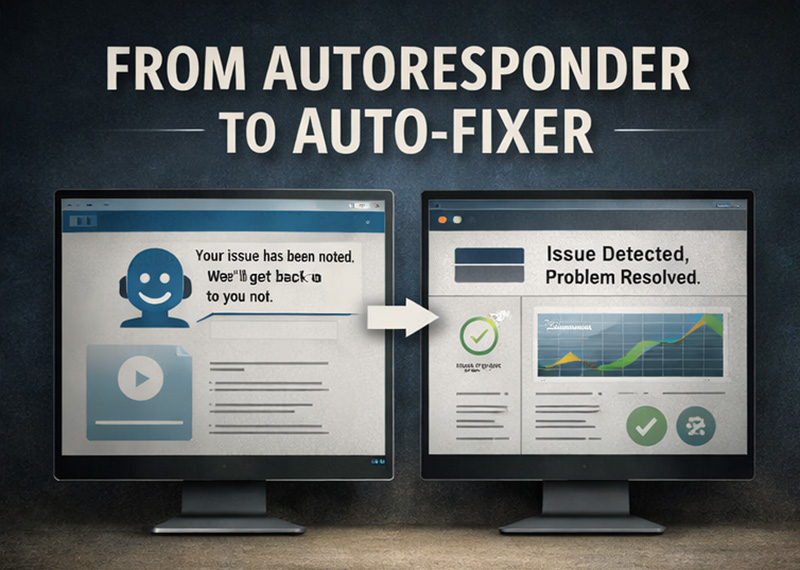 Autoresponders were supposed to liberate us. Instead, they gave us out-of-office loops, canned apologies, and the quiet erosion of trust.
 Entrepreneurs are like teabags—you don’t know how strong they are until you drop them into hot water. The catch is that some founders keep throwing themselves into hotter and hotter water for the wrong reasons, because they’ve descended into a psychological whirlpool I call innovation limerence.
